
What is the difference between sterling silver and pure silver? The short answer is 7.5% of something else, usually copper.
That sounds like a small difference. It changes almost everything about how the metal behaves, and it is the reason the stock in your display case is stamped 925 rather than 999. Here is what that 7.5% actually does.
Pure silver, and why almost nobody makes jewelry from it
Pure silver is also called fine silver. It is 99.9% silver, and it carries a .999 stamp.
It is also very soft. Soft enough that a fine silver ring band will go oval sitting in a pocket, and a fine silver prong will not keep hold of a stone. Think of it like pure gold, which nobody makes a wedding band from either, for exactly the same reason.
So fine silver turns up in a narrow set of places. Simple pendants. Plain earrings. Bullion. Things where nothing has to hold tension or survive being knocked.
Sterling silver, and what the copper is for
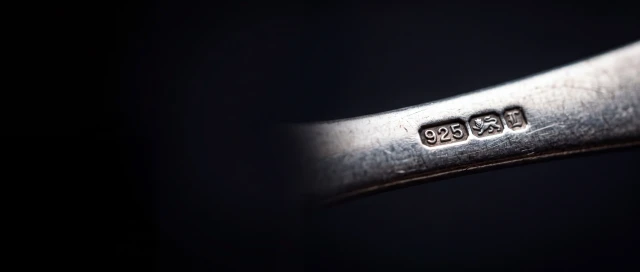
Sterling is 92.5% silver with 7.5% of another metal mixed in, nearly always copper. That is where the number 925 comes from, and the stamp is a purity claim: this piece is at least 92.5% silver by weight.
Adding copper makes the metal harder. Hard enough to be drawn into chain, cast into settings, stamped with a pattern, polished to a shine, and worn every day for years without going out of shape. That is the whole reason 925 became the standard for jewelry, rather than a compromise anybody settled for.
The two side by side
| Pure silver (fine silver) | Sterling silver | |
|---|---|---|
| Silver content | 99.9% | 92.5% |
| The rest | Trace elements | 7.5% other metal, usually copper |
| Hallmark | 999 or .999, sometimes FS | 925 or .925, sometimes STER or STG |
| Hardness | Very soft, bends and scratches easily | Hard enough for daily wear |
| Tarnish resistance | High. Little reactive metal present | Lower. The copper reacts with airborne sulphur |
| Usual jewelry use | Rare. Simple pendants, earrings, bullion | The standard for rings, chains, clasps, settings |
| Cost per gram | Higher | Lower |
There are other grades between and around these two. Britannia at .958, Argentium, coin silver at .900 and nickel silver, which contains no silver at all despite the name. the full range of silver grades used in jewelry covers each of them if you need the wider picture.
The part that is usually explained backwards
Here is a question worth getting right, because a lot of published advice has it the wrong way round.
Which tarnishes faster, sterling or pure silver?
Sterling does. Not pure silver. And the reason is the copper.
Silver on its own is fairly unreactive. Copper is not. It reacts readily with sulphur compounds in the air, and the grey-black film people call tarnish is the result. More reactive metal in the mix means more tarnish, sooner. Pure silver has almost none of it, so it stays bright longer.
This matters at the counter more than it might sound. When a customer brings back a dull 925 chain convinced, they were sold a fake, they were not. They were sold real sterling silver behaving exactly as sterling silver does. Fake stock usually gives itself away differently, by wearing through to a different colour underneath, which is plating failing rather than metal tarnishing.
Tarnish also cleans off, and it can be slowed. how to stop 925 silver tarnishing covers the three methods that work, and rhodium plated silver jewelry is worth stocking if you want pieces that stay bright with no effort from the customer at all, because the rhodium layer sits between the sterling and the air.
What the 925 stamp promises, and what it does not
The stamp means one thing: the piece is at least 92.5% silver by weight. Applied honestly, it is reliable, and the whole trade runs on it.
It is worth knowing what it stays silent about.
● What the other 7.5% is. Copper is standard, but not universal.
● Whether the piece is plated or coated. A 925 piece may or may not be rhodium plated or e-coated.
● Whether there is nickel in the solder or the findings. The body of a piece can be genuine 925 while the clasp is not.
● Who applied the stamp. A punch can be used by anyone, which is why a stamp is a starting point rather than proof.
If you want to check stock that has already arrived, how to spot real sterling silver jewelry runs through the tests you can do by hand. If you are checking a supplier before ordering, how to find wholesale jewelry suppliers covers the questions to ask in writing.
What this means if you are stocking silver rather than wearing it
● Buy sterling for almost everything. Fine silver is not a premium upgrade for a general range, it is a different material with different failure modes, and it belongs in a narrow slot.
● Ask what the 7.5% is. Some manufacturers use zinc, germanium or a little palladium to slow tarnishing, which is what Argentium does. A supplier who cannot answer has not asked their own factory.
● Treat plating as a separate question from purity. Whether a piece is rhodium plated changes how it behaves in a display case, and the 925 stamp does not imply it either way.
● Tell customers about tarnish before they discover it. A small card in the box saying sterling silver tarnishes and here is how to keep it bright turns a return into a care instruction, and it removes most silver complaints a shop ever gets.
On pricing, plain chain and studs get price-checked in seconds and detailed settings do not, which is why the two behave completely differently on margin. buying wholesale jewelry for resale goes into that.
Common questions
What is the difference between sterling silver and pure silver?
Pure silver, also called fine silver, is 99.9% silver and stamped .999. Sterling silver is 92.5% silver mixed with 7.5% of another metal, usually copper, and stamped 925. Sterling is much harder, which is why jewelry is made from it. Pure silver resists tarnish better but bends and scratches too easily for anything worn daily.
Is sterling silver real silver?
Yes. Sterling silver is 92.5% genuine silver by weight. It is an alloy rather than a pure metal, but the silver in it is real silver all the way through, not a coating over something else. The 925 stamp is recognized across the trade and nearly all silver jewelry is made to that standard.
Does sterling silver tarnish faster than pure silver?
Yes, and this is commonly stated backwards. Sterling tarnishes faster because the copper in the alloy reacts with sulphur compounds in the air. Pure silver contains almost no reactive metal, so it stays bright for longer. Tarnish on a 925 piece is normal behavior rather than evidence of a fake, and it cleans off.
Which is better for jewelry, sterling silver or pure silver?
Sterling, for almost anything that gets worn. It holds a shape, keeps stones in settings, survives daily wear and takes a high polish. Pure silver only wins where softness does not matter and tarnish resistance does, which in practice means simple pendants, plain earrings and bullion rather than rings or anything with a clasp.
What does the 925 stamp actually guarantee?
That the piece is at least 92.5% silver by weight, and nothing beyond that. It does not tell you what the remaining 7.5% is, whether the piece is rhodium plated or e-coated, or whether nickel appears in the solder or findings. Those are separate questions for a supplier, and they matter if you sell into markets with nickel release limits.
Why is sterling silver cheaper than pure silver?
Because 7.5% of it is copper rather than silver, and copper costs a fraction of what silver does. The difference per gram is real but smaller than people assume, since you are still buying 92.5% silver. The main reason sterling dominates jewelry is not price, it is that you can actually make things from it.
In short
7.5% copper is what turns a beautiful metal into a workable one. It also makes it tarnish. Both of those facts come from the same place, and being able to explain that across a counter is worth more than any product description.
ELF925 has manufactured 925 sterling silver in Thailand since 2001, stamped and conforming to international, EU and USA standards. You can see how it is made at our Thailand factory or browse the complete wholesale jewelry catalog.


