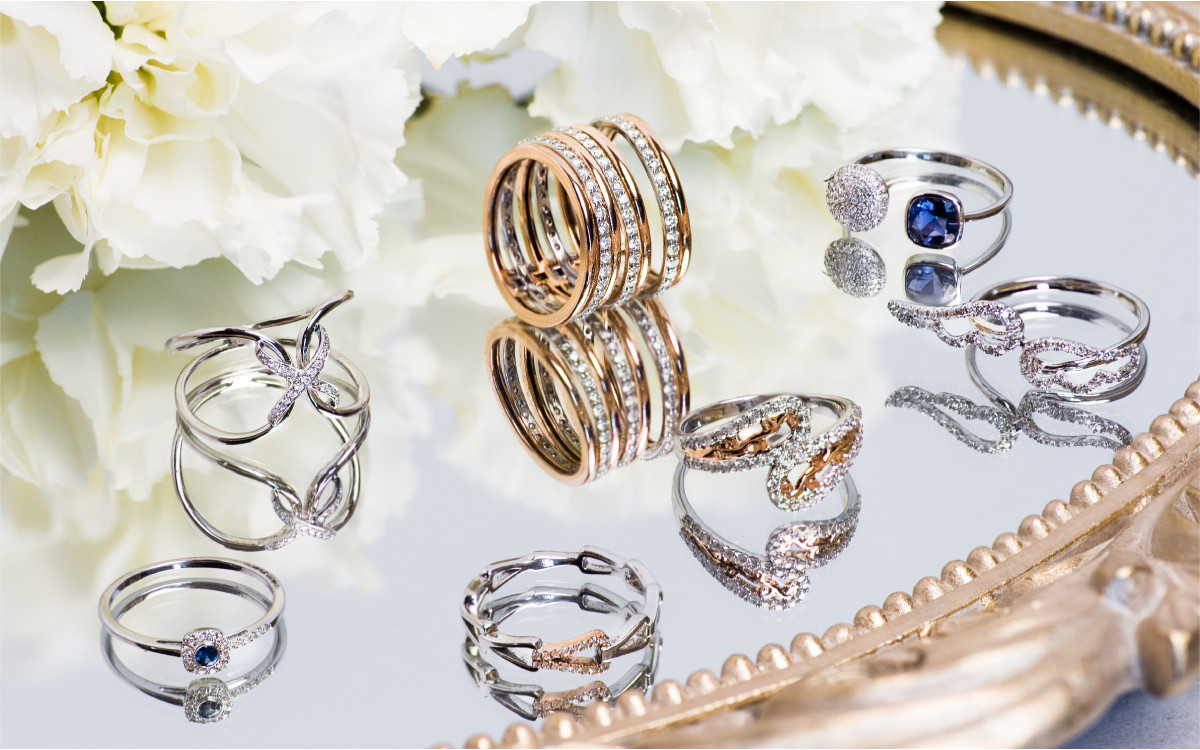
Jewelry usually retails at 2.2 to 3 times what you paid for it. Most resellers get closer to 1.6 in their first year. That gap decides whether you can afford a second order.
Discounting is not the cause. Most people look there first and find nothing. The money goes to costs that sit outside the markup sum: marketplace commission, card processing, packaging, shipping you absorbed, and stock that never sells at any price.
So here is the arithmetic, and the buying decisions that come out of it. The order matters. Do the sums first.
Why the first order is where it goes wrong
Picture two first orders of the same value. One buys forty styles, five pieces each. The other buys eight styles, twenty-five pieces each.
On paper the first looks like a shop. The second looks thin.
In practice the first one cannot work. A style sells out and you have nothing to replace it with. By the time a reorder lands, the interest has gone. A style fails and it fails quietly, hidden among thirty-nine others. You learn nothing. You end up with forty small questions and no way to answer any of them.
Eight styles give you eight clear answers inside a month. Reorder the winners while people still want them. Cut the losers, which will be obvious.
A narrow order is not a smaller ambition. It is a faster feedback loop, and feedback is the whole point of a first order.
Yes, eight styles will not fill a display. That matters less than it seems. You fill the display with the second order, and that one is built on evidence.
What to stock, and why silver
Sterling silver sits in a useful spot. Unit cost is low, so you can buy a real range instead of a handful of samples. The material has a recognized standard, so customers know what they are getting. And it sells as a gift, as fashion, and as everyday wear.
Not many materials do all three.
High-end stock does the opposite. It ties up your cash in pieces that sell slowly. Slow stock turn kills new resellers long before bad taste does.
Buying what you would wear yourself is the most expensive habit in this business.
Two categories are worth a look on a first order. wholesale silver charms get bought again and again by the same customer, which changes what that customer is worth to you. overstocked items let you test a style cheaply without committing to a full run. If you are still choosing between metals, read the difference between sterling silver and silver first. The vocabulary alone changes how seriously a supplier takes your email.

Working out the real margin
The 2.2 to 3 range is real. It is also a gross figure, before anything comes out.
Distinctive designs hold the top of that range, because nobody can price-check them. Plain chain and studs sit at the bottom, because anyone can, on their phone, standing in your shop.
Four things come out of that gross margin, and resellers routinely underestimate all four.
● Marketplace commission. Anywhere from single digits to over 20%, depending where you sell.
● Payment processing. A slice of every single transaction.
● Packaging. A real per-unit cost once it is any good.
● Dead stock. The share that never sells. It shows up nowhere until you close the books.
Together these often eat a third of your margin. A 2.5x markup that looked fine on paper can land below 1.6 once the money clears. And 1.6 will not pay for your next order.
So run the sum backwards. Set the retail price your market will carry. Take off the real fees. Take off an honest allowance for what will not sell. What is left is the most you can pay per piece.
Bring that number to a supplier. Do not bring their catalogue to your calculator.
Using order size to cut your unit cost
Bigger orders lower your unit cost, which lifts margin on every piece. Bigger orders also tie up cash and add risk. Neither wins automatically, so work it out per order rather than picking a rule once.
ELF925 applies discounts by order value, automatically at checkout.
| Order value (USD) | Discount | Shipping |
|---|---|---|
| 99 to 498 | 0% | Standard |
| 499 to 748 | 0% | Free worldwide |
| 749 to 998 | 5% | Free worldwide |
| 999 to 1,998 | 10% | Free worldwide |
| 1,999 to 2,998 | 15% | Free worldwide |
| 2,999 to 4,998 | 17% | Free worldwide |
| 4,999 and above | 20% | Free worldwide |
Read that as a set of steps, not a slope. Going from 498 to 499 USD costs you one dollar and wipes out the shipping charge. Going from 998 to 999 doubles your discount from 5% to 10%.
If your order lands just under a step, the extra pieces needed to cross it are often cheaper than not buying them. Full terms are on our volume discount tiers and shipping terms.
The reverse is just as important. If crossing a step means two hundred units of something with no sales history, that is not a saving. That is inventory risk wearing a percentage sign. It is how a business with good margins runs out of cash.
Where to buy
Four channels. They do different jobs, so there is no single best one.
- Manufacturers. Lowest unit cost, because nobody has added a distributor margin. Also the only channel that can answer a technical question about plating thickness or nickel. Minimums vary far more than people expect.
- B2B directories like Faire, Wholesale Central and Alibaba. Fastest way to a shortlist. They check that a business sells wholesale. They do not check the metal.
- Trade shows. The only place you can handle the product before committing, and the only place with show-only prices.
- Marketplace and closeout lots. Cheap way to test a style. Useless if you need to restock it.
Whichever you use, check before you commit. Order a paid sample, not a free one. Inspect the stamp yourself when it lands. Get nickel and lead compliance in writing. how to find wholesale jewelry suppliers has the full sequence, and how to spot real sterling silver jewelry covers the physical checks.
Where to sell, and what each place costs you
Online is easier to start and takes more of your money in fees. Offline is the other way round. Most resellers who last do both, because the two cover each other's bad months.
Online
- Your own store. Best margin, because nobody takes a commission. Worst traffic, because nobody sends you any. Worth building once you have demand to point at it.
- Etsy. Good for distinctive and handmade-looking work. Weak for plain pieces, which get undercut fast.
- Amazon. Huge traffic, thin margins, and instant competition on anything common.
- Social selling. Works when there is a person and a story behind the shop. It is not a catalogue.
Offline
- Craft and jewelry fairs. Cash on the day, and a full weekend of watching which pieces get picked up.
- Boutiques and consignment. Lower volume per shop, but a boutique that sells out reorders. That is the number that matters.
- Pop-ups and market stalls. A way to test a location before signing a lease.
- Your own premises. Highest fixed cost, so only once stock turn is proven somewhere else.
Seasonal ranges are the most reliable lift in either channel, because the occasion creates the demand for you. Order seasonal and special occasions jewelry two to three months before the date. Order it in the month itself and you are queueing behind everyone else while lead times stretch.
The number that decides your year
Reorder lead time gets less attention than any other term and decides more than most of them.
A style that sells out and comes back in six weeks has been sold once. The same style back in ten days has been sold over and over.
Get three numbers before your first order, not after. The reorder minimum, which is often higher than the opening one. The lead time on a repeat run. And how fast they dispatch once you have paid.
ELF925 dispatches within 2 business days to more than 200 countries by DHL, FedEx and UPS. The 99 USD minimum applies to reorders too, not just first orders. Use that as your benchmark when someone quotes you three weeks.
Those terms and the full catalogue are at the ELF925 wholesale jewelry collection.

Conclusion
Reselling jewelry is an inventory business first and a product business second. Buy narrow enough to learn something. Price backwards from retail, not forwards from the supplier. Ask about reorder lead time before it becomes urgent. Treat volume discounts as a tool, not a prize.
Businesses rarely fail here because the jewelry was wrong. They fail because the first order was built to look like a shop instead of to teach them something.
Frequently asked questions
Is reselling wholesale jewelry profitable?
Yes, at typical markups of 2.2 to 3 times wholesale cost, though what you actually keep is always lower than the headline. Marketplace commission, card processing, packaging and unsold stock together often take a third of the gross margin. What decides profit is not the markup you set. It is how fast stock turns and how cheaply you can reorder the lines that worked.
How much money do I need to start reselling jewelry?
Less than most people think. Some manufacturers start under 100 USD, ELF925 among them. A first order with enough range to teach you something sits between 300 and 800 USD. Crossing 499 USD also removes the shipping cost on an ELF925 order, so the middle of that range gives you more per dollar than the bottom.
Where can I buy jewelry in bulk for resale?
Four places: direct from a manufacturer, through a B2B directory like Faire, Wholesale Central or Alibaba, at a trade show, or from marketplace closeout lots. Manufacturers give the lowest unit cost and the most reliable restocking. Directories get you a shortlist fastest, but they only verify that a business sells wholesale, not that the metal matches the description.
How much should I mark up wholesale jewelry?
Between 2.2 and 3 times wholesale cost. Distinctive designs hold the top of that range, plain chain and studs the bottom. The more useful sum runs backwards: set the retail price your market carries, take off the real fees and an allowance for unsold stock, and what is left is the most you can pay per piece.
What should I buy on a first wholesale jewelry order?
Six to ten styles, ordered deep enough that you can reorder the ones that sell, spread across price points, in sterling silver rather than high-end pieces. Forty styles at five pieces each is the usual mistake. It looks like a shop but behaves like a clearance bin, because you cannot restock anything that sells and nothing stands out enough to cut.