Check the stamp first. Then check the metal. Those are two different jobs, and most problems in this trade come from doing only the first one. Silver plated brass, zinc alloy and polished steel all look like silver under shop lights. This page shows you how to tell them apart at the counter, in under a minute, with no equipment.
What sterling silver is
Pure silver is too soft for most jewelry. It bends and scratches easily. So jewelry is made from an alloy: 92.5% silver and 7.5% other metal, usually copper. The 925 mark comes from that 92.5%.
Three things follow from this. Silver content sets the value. The copper affects how hard the piece is and how it tarnishes. And anything sold as sterling has to be at least 92.5% silver. Less than that, and it should not carry the name.
For more on what the stamp covers and what it leaves out, see what the 925 stamp does and does not guarantee.
Step one: read the stamp
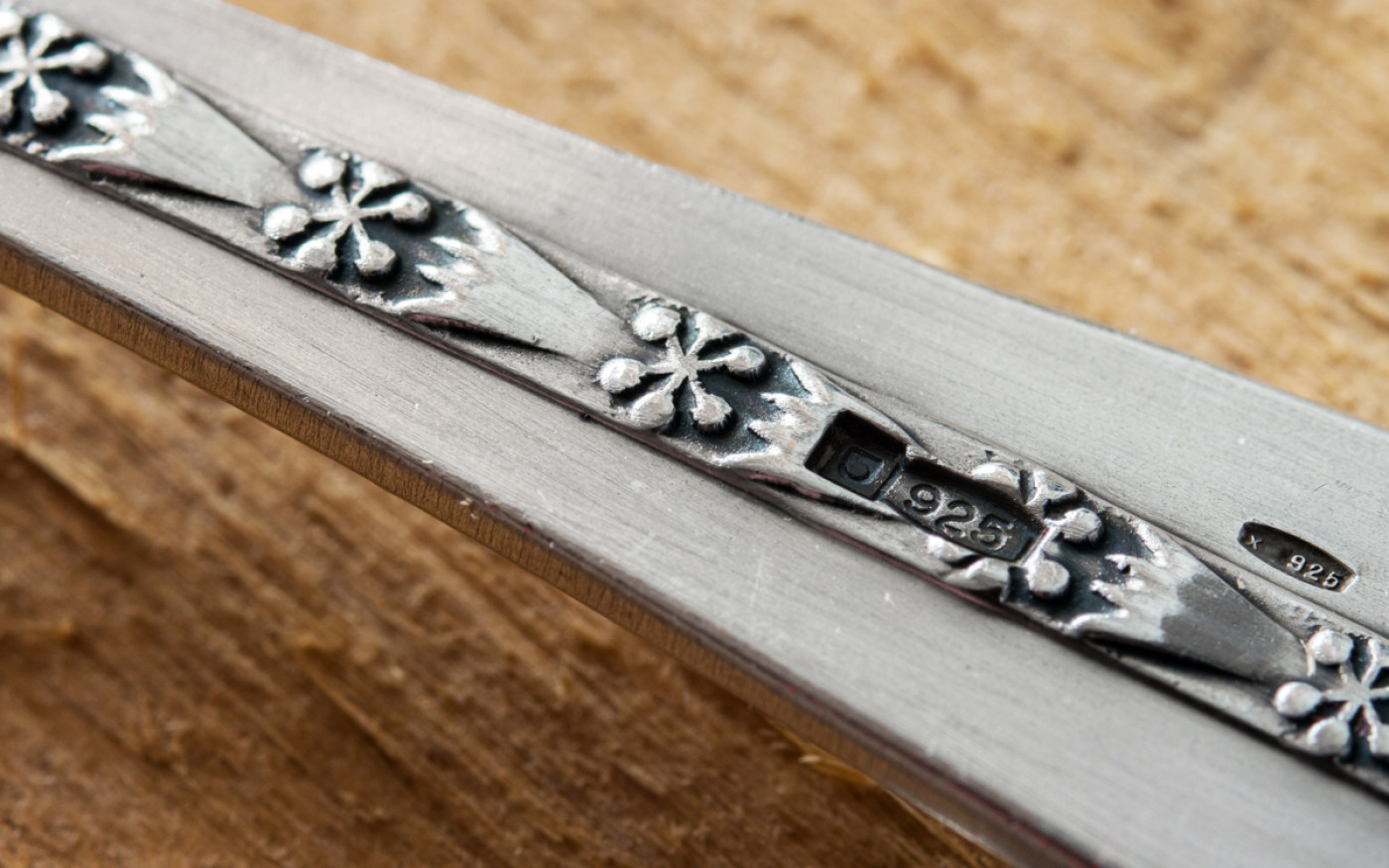
Look for 925, 92.5, S925, Sterling or Sterling Silver. It is usually inside a ring band, on a chain clasp, or on the back of a pendant.
Good signs are simple. The stamp is clear and easy to read. It sits in a sensible place. And it looks the same on every piece in the same order.
Bad signs are just as simple. No stamp at all, on a piece with plenty of room for one. A stamp that is crooked, blurred or squashed. Different stamps on similar pieces from the same supplier, which usually means they did not make the jewelry themselves.
One to watch for: a stamp that reads 9.25 instead of 925. Real factories do not make that mistake.
Now the important part. Fake jewelry gets stamped too. A stamp is cheap. It tells you what someone says the metal is, not what it is.
Step two: five tests you can do at the counter
None of these needs a machine. Do two or three of them together. One test on its own can be argued with. Three that agree usually cannot.
| Test | What real silver does | What to watch for |
|---|---|---|
| Magnet | Nothing. Silver is not magnetic | Clasps and springs can hold steel. Test the main body |
| Weight | Feels heavy for its size | Big pieces that feel light or hollow |
| Tarnish | Darkens softly and evenly, polishes off | Flaking, peeling, green or yellow |
| Ice | Ice melts on it noticeably fast | Almost nothing else melts ice this quickly |
| Sound | A light, clear ring when tapped | A dull thud |
The magnet test
Silver is not magnetic. If a piece sticks to a magnet, it is not silver. This works on wholesale silver rings, chains, pendants and earrings.
One thing to know. Clasps and springs often contain steel, so they may pull slightly even when the piece is genuine. Test the main body, not the fittings.

The weight test
Silver is heavy for its size. Once you have handled real silver for a while, a light piece feels wrong straight away.
Keep one piece you know is real behind the counter. Hand both to whoever is checking. This is not exact, but it is the test your staff will use every day.
The tarnish test
This one gets misread more than any other, so here it is plainly.
Real silver tarnishes. That is normal. The copper in the alloy reacts with sulphur in the air, and the piece slowly darkens. It darkens evenly, usually settling into the grooves first. A silver cloth wipes it off and the bright metal is still underneath.
Flaking is not tarnish. Peeling is not tarnish. Green or yellow marks are not tarnish. All three mean the plating has worn away and you are seeing the base metal.
There is one more sign people miss. A piece that stays perfectly bright for a year and never dulls is probably not silver. A little tarnish is a good sign. how to stop 925 silver tarnishing covers how to keep display stock looking bright.
The ice test
This is the hardest test to fake, and hardly anyone uses it.
Silver moves heat faster than any other metal. So, an ice cube on real silver melts much quicker than it does on anything else.
Put one cube on the piece you are checking. Put another on something you know is not silver. Watch for twenty seconds. It costs nothing, and plating does not change the result.
The sound test
Tap two pieces together lightly. Real silver gives a clear ring that holds for a moment. Cheap metal sounds dull and short.
This one takes practice, so use it to back up the other tests rather than on its own.
When you need to be certain
Two methods settle it properly. Which one you use depends on how big the order is.
Nitric acid
Put one small drop on a hidden spot. Real silver turns creamy white. Base metals turn green or brown.
It marks the surface, so only use it on samples. Never on stock you plan to sell.

XRF analysis
XRF stands for X-ray fluorescence. It reads the exact metal content without touching or marking the piece.
It tells you the real silver percentage and what the other metals are. No other method here does both. Use a lab for this when you are checking a new supplier or a large order.

What you get instead of silver
Three things turn up again and again. They fail in different ways.
| What it is | How it fails | Where it belongs |
|---|---|---|
| Silver plated brass or copper | The thin layer wears off where it rubs. Colour goes patchy and the base metal shows | Fine to sell, as long as it says plated and is priced as plated |
| Polished stainless steel | It does not fail. It is simply not silver | Its own shelf, its own label |
| Tibetan or German silver | Contains little or no silver. Some has held unsafe lead or nickel | Nowhere. The name is the warning |
Plated jewelry and steel are both fine products. They sell well and they make money. The only problem is calling them silver.
On the third row, what lead and nickel in jewelry actually do explains why a vague metal name is a safety question, not just a quality one.
How to stop buying fakes
Everything above happens after you have paid. It is cheaper to stop it earlier. Three habits do most of the work.
● Ask technical questions and listen to the answer. What is the metal made of? Where is it stamped? How thick is the plating in microns? Is there nickel in the solder or the clasps? A real factory answers with numbers. A reseller changes the subject.
● Treat a very low price as a warning. Silver has a price floor set by the metal itself. Nobody beats it. Below that floor, the piece is plated, mixed with something else, or lighter than it looks.
● Test the sample order, not the big one. Stamp, magnet, ice, weight. Send one piece to a lab if the order is large. A hundred dollars of testing beats four hundred pieces you cannot sell.
For the full supplier checklist, see how to find wholesale jewelry suppliers. For judging quality once the stock arrives, see our buyer's guide to sterling silver quality.
Why this is worth the minute it takes
Real 925 means fewer skin reactions. It means pieces that age instead of falling apart. It means customers who come back and buy again.
Fake silver means returns, complaints, and reviews you cannot remove. The cost of the stock is the smallest part of that.
The cheapest option of all is a supplier you do not need to test. a wholesale partner like ELF925 should be able to tell you the metal content, stamp every piece the same way, and answer a technical question without going quiet.

Frequently asked questions
How can I quickly check if silver is real in my store?
Look for a 925, 92.5, S925 or Sterling stamp. Hold a magnet to the main body of the piece, because silver is not magnetic. Compare the weight with a piece you know is real. Look at how it tarnishes: real silver darkens evenly and polishes clean. An ice cube melting fast on the metal is a good final check, since silver moves heat faster than any other metal. These five checks take under a minute.
Is every piece of genuine sterling silver marked 925?
Most are, but not all. Very small parts like thin earring posts may have no room for a stamp. A missing stamp is a warning sign on anything with space for one. It also works the other way: fake pieces are stamped 925 all the time, so the stamp tells you what someone claims, not what the metal is.
Does real sterling silver tarnish?
Yes, and that is a good sign rather than a fault. The copper in the alloy reacts with sulphur in the air, so the piece darkens softly and evenly. A silver cloth takes it off. What is not normal is flaking, peeling, or green and yellow marks, which mean plating has worn through to the base metal. A piece that never dulls at all is often not silver.
Is sterling silver hypoallergenic?
Most people wear it with no trouble, but hypoallergenic does not mean nothing can happen. Most reactions blamed on silver are actually to nickel, which can sit in the solder, the clasp or the earring post even when the main body is real 925. If you sell into the EU or UK, ask your supplier to confirm nickel compliance in writing.
Can I rely only on the hallmark?
No. Anyone with a punch can add a stamp, and fake stock is stamped as a matter of routine. Use the stamp as your starting point, then add two or three physical tests. For large orders and new suppliers, use XRF analysis or send a piece to a lab.
Does the ice test really work on silver?
Yes, and it is the hardest test to fake. Silver moves heat faster than any other metal, so it pulls heat into an ice cube much quicker than brass, steel or zinc alloy can. Put one cube on the piece you are checking and one on something you know is not silver, then watch for about twenty seconds. Plating does not change the result, because the thin silver layer sits on a base metal that moves heat poorly.
What should I ask a wholesale supplier before a first order?
Four things, and ask for the answers in writing. What is the metal made of? Where and how is each piece stamped? How thick is the plating in microns on any plated line? Is there nickel in the solder or in bought-in parts like clasps and posts? A factory can answer all four with numbers. A company that buys in finished stock usually cannot answer the last two, and that tells you more than the price does.
Buying silver you do not have to test
Five counter tests will catch most of what is wrong with a batch. None of them tells you where the batch came from. That is the part that stops it happening again.
ELF925 makes 925 sterling silver in Thailand. Every piece is stamped, and production meets international, EU and USA standards. Browse the complete wholesale jewelry catalog, with a $99 minimum order and free worldwide shipping over $499. Ask us the four questions above before you order.